
Phyllis's insights have been widely published and she is a frequent contributor to the Washington Post
Phyllis is Available for Commentary and Media Interviews

Click To Read More
When I was in journalism graduate school, I'd cut and save all my clips to show potential employers. Nowadays, most of my pieces run online only, so it was even MORE exciting to see my article, ``4 Myths About Peer Pressure,`` on the cover of The Washington Post’s Local Living section.

Click To Read More
``If you don’t know why you’re stressed, you can’t target the right solution,” Fagell said. “You can help a kid figure out why they feel the way they do & come up with a word for the feeling itself.`` Phyllis was quoted in this Edutopia article about teens and stress.

Click To Read More
“Depending on the day - or minute - a middle schooler can be 14 going on 4 or 14 going on 40. They’re sophisticated and take things in quickly yet aren’t jaded.” Phyllis was quoted in Deborah Farmer Kris’s CNN article about reframing the narrative around middle schoolers.

Listen here
Phyllis was the featured guest on the Psychologists Off the Clock Podcast about the unique challenges middle schoolers face and how parents can help them build key skills to thrive.
Click To Read More
Reassuring our children during turbulent times is no small task, especially because parents’ and kids’ well-being are inextricably intertwined. But parents are not powerless. Here are six ways caregivers can help themselves — and their children — find a way back to feeling okay when times are tough.
Click To Read More
In this Washington Post article, “Five Ways Parents Can Help Children Have a Better School Year,” Phyllis shares five ways caregivers can help kids learn, connect with others, and maintain a strong sense of self.
Click To Read More
In this Washington Post article, Phyllis writes about “7 Ways Parents Can Help Kids Persist at Tasks They Resist.”

Click To Read More
Phyllis’s Career Confidential column for PDK, International was a “top column” of 2021.

Click To Read More
Phyllis was quoted in the USA Today article, “Many parents are saying no to sleepovers. At what cost?”
Click To Read More
Phyllis was interviewed for this CNN article about how to talk to kids about reproductive rights.
Click To Read More
Phyllis was quoted in The Washington Post in this article about how mental health problems have grown, especially among tween girls.

Click To Read More
Phyllis was interviewed for this Edutopia article about how to lower kids’ stress during the school year by asking a few simple questions.

Click To Read More
In this article in “SheKnows,” Phyllis spoke to writer Nefertiti Austin about neurologically diverse kids and the challenges they face at school.

Click To Read More
In this Fatherly piece, Phyllis is quoted sharing her thoughts on how parents can partner effectively with their child’s school.

Click To Read More
Phyllis was an expert source for this Hechinger Report article on helping kids stay safe and healthy.
Click To Read More
In this TeachStarter article, Phyllis shared tips for teachers talking about Ukraine with elementary students.

Click To Read More
Phyllis spoke to writer Katy Dunn (Prep Matters) for an article called “Kids Need Social Practice.”

Click To Read More
In advance of AMLE’s Summer Leadership Institute, Phyllis shared some tips for finishing the year strong.
Click To Read More
Phyllis was quoted in this CNN article about school dress codes and kids’ body image.

Click To Read More
In this article, Phyllis is interviewed about how teens can use digital tools to bolster their well-being.
Click To Read More
Phyllis was quoted in this Hechinger article about middle schoolers’ desire for a welcoming, safe place to learn during the pandemic.
Click To Read More
Phyllis’s ideas were shared in this Hechinger article about “lessons we’ve learned” during the pandemic.

Click To Read More
Phyllis was quoted in this Psychology Today article by Dr. Ken Ginsburg.

Click To Read More
Phyllis was quoted in this Scope (Scholastic) article for kids about when it’s OK to cancel plans.

Click To Read More
Phyllis was quoted in this article in National Geographic about why kids need mental health days as much as adults.

Click To Read More
Phyllis’s article on managing uncertainty, which she wrote for the December 2020/January 2021 issue of EL Magazine, was named one of the “Top Ten Most Read” articles from 2021:
Click To Read More
Phyllis wrote about six ways caregivers can help themselves — and their children — find a way back to feeling okay mid-pandemic.
Click To Read More
In this CNN article, Phyllis wrote about the ways that adults can help children as they return from winter break in the midst of the omicron surge and during a period of sustained stress.
Click To Read More
Phyllis wrote this article about hope, healing and fostering students' well-being mid-pandemic, for EL Magazine (ASCD).

Click To Read More
Phyllis was included in The Week's round-up of ``the best parenting advice.``

Click To Read More
Phyllis is quoted in this two article, which are part of Hechinger Reports' series on middle school. She addresses tweens' need for more agency and more time for recess and socializing.
Click To Read More
Phyllis wrote this article for CNN offering four tips to help build tweens' and teens' resilience through volunteerism and activism.
Click To Read More
In this CNN article, Phyllis weighed in on the ``devious licks`` TikTok challenge. She warned that punishing everyone for the actions of a few students can sow mistrust, and noted that respect is a two-way street. The consequence should never be depriving students of the ability to meet their basic physiological needs

Click To Read More
The Let Grow Foundation published Phyllis's story about her son's experience going on a school trip to China at age 14, falling asleep, then waking up alone late at night on a locked bus in Beijing. Phyllis shares what he learned about his capacity to improvise in a tough situation.
Click To Read More
Phyllis is quoted in this article, which are part of Hechinger Reports' series on middle school. She addresses tweens' need for more agency and more time for recess and socializing.
Click To Read More
Phyllis is quoted in this article, which are part of Hechinger Reports' series on middle school. She addresses why middle school can be “the last best chance” to transform the trajectory of students.
Click To Read More
Whether children lack confidence because their grades took a hit during the pandemic, they’re worried about reestablishing friendships or they’re coping with stressors at home, they could struggle with academic engagement in the '21-'22 school year. In this Washington Post article, Phyllis shares six ways parents and educators can tamp down the pressure, boost kids’ motivation and help them take a more active, joyful role in their own learning.

Read more
Scholastic Magazine asked Phyllis to weigh in on the topic of quitting - when does it make sense to move on from an activity and try something new?

Click to Listen
Phyllis and Principal Joe Mazza kick off the 2021-2022 Walk & Talk podcast series with a conversation with science writer Annie Murphy Paul, author of The Extended Mind. The three talk about all the ways kids can learn that involve more than simply ``using their brain.``

Click To Read More
In The 74 Million's series on Texas schools' efforts to address the student #mentalhealth crisis, Phyllis shares her thoughts on how adults can help kids cope. As she noted: ``Children are more sensitive; they’re not all rolling with the punches.``
Read more
As Phyllis told USA Today, when it comes to sleepovers, ``there's a fine line between raising kids who heed their spidey sense and can extricate themselves from a bad situation, and raising kids who are afraid to go out in the world.``
Read more
In Phyllis's first article for CNN, she shares several ways adults can reframe social setbacks for tweens and teens and help them recover. As she quotes Ned Johnson as saying, ``if only there were interpersonal airbags for those collisions when a friendship crashes & burns.``
Click To Read More
In this article for CNN, writer Christine Koh shares Phyllis's thoughts on helping teens and tweens regulate their emotions, including the following: ``Middle schoolers can have a hard time assuming positive intent, and it can help to encourage them to think more expansively about someone's motives. You might say, 'I left a message for Sandy, and she didn't call me back. At first, I walked around wondering if maybe she was angry with me, but I decided to leave a second message, and it turned out she never received the first one.'``

Click To Read More
Phyllis was a guest on Steve Barkley's podcast, talking about how teachers can support students' emotional needs as they return to school.
Read more
As the pandemic lets up thanks to vaccinations, some children are too guarded after a year of unpredictability to dive back into life with their typical enthusiasm. But as I write in my latest column for On Parenting for The Washington Post (the 6/3/21 Living cover story), with time and targeted support parents and caregivers can help even the most apprehensive child once again engage fully and joyfully. Here are six ways to help kids regain a sense of purpose

Read more
Phyllis was quoted in this Medium article about how adults can help students build resilience.
Click To Read More
In this episode of Middle School Walk and Talk, the podcast that Phyllis and Principal Joe Mazza co-host for AMLE, they bring author Katie Hurley on to discuss the best ways to support students who are struggling socially as they return to in-person learning.
Click To Read More
Science writer Melinda Wenner Moyer included Phyllis's ideas in this piece about how parents can support a struggling teen.

Click To Listen
There's no question that teens suffered during the pandemic --some more than others. But as Phyllis told the hosts of the BBC World News show Newsday, she doesn't consider 2020-2021 a ``lost year.`` She noted that while kids may have had less time in class, they've had more time to develop self-awareness, practice flexibility and forge transition skills.

Click To Read More
Phyllis was quoted in this article about covid's toll on tweens. As she noted, tweens have had a hard time. “Everyone is having a harder time interpreting social cues, whether they’re doing it from a distance through a screen or through a mask,`` she explained. ``Normally, if two teens get in a fight over social media, they have the opportunity to work it out in person at school the next day. But now, if a teen is in virtual school and his best friend blocks him on social media, he has no way to figure out what happened and smooth things over. All kids right now are feeling like their friendships are more mercurial and more fragile.``

Click To Listen
Phyllis was a guest on Dr. Regina Lamourelle's podcast for BAM Radio, offering tips for managing tweens, teens and screens during the pandemic.
Read more
In this ``The Meaningful Middle`` column for AMLE, Phyllis writes about her own experience losing her ``math mojo`` back in middle school, the teacher who helped her regain her confidence, and how educators can help tweens rebuild their academic self-concept when they stumble.

Click To Read More
Phyllis is quoted in this New York Times article. Reporter Judith Warner writes: ``Ms. Fagell was adamant that parents should not panic or spread the “lost year” narrative. Helping middle schoolers requires seeing the bigger picture and holding two seemingly contradictory ideas simultaneously: The past year has been terrible, AND most kids will be fine.``
Click To Read More
``When boys act out, we have to target their behavior and not assault their character,`` Phyllis told Edutopia in this article about boys' mental health. ``Boys who constantly expend energy to pretend they're something they're not suffer emotionally. Behavior is communication.``

Click To Read More
“Tweens are extra sensitive, and the absence of in-person social interactions can leave them even more susceptible to rumination, whether they get dropped from a text chain or left out of plans to make a TikTok video,” Fagell told School Library Journal
Click To Read More
``Kids can't solve problems if they're overwhelmed,`` Phyllis told Edutopia for this article on instilling home. ``A small setback can leave a kid feeling hopeless, but it doesn't take much to pull them back from the brink.``

Click To Read More
Phyllis was quoted in this article about how to maximize the overnight camp experience and help kids adjust to being away from their families post-pandemic.

Click To Read More
In this Boston Globe article, Phyllis is quoted as saying: “We can’t talk a child out of a bad mood or pessimistic outlook; we have to help them reach those a-ha moments on their own. We can do that by asking questions that help them embrace the upside, such as ‘What insights have you gained?’ `{`and`}` ‘What have you learned about getting through a tough time?’”
Click To Read More
``Girls don’t have to share interests with role models,`` Phyllis told The New York Times. ``Focus on characteristics, not achievement. Girls can admire an athlete's journey or their values, for example, and find common ground, even without the same skills.”

Click To Read More
Phyllis spoke to Good Day Tulsa (KTUL) about how friends and families can keep the peace when their political views differ dramatically.

Click To Read More
Phyllis was a guest on The Ninth Grade Experience podcast, talking about the transition from eighth to ninth grade.

Click To Read More
As Phyllis shared when she appeared on BAM Radio Network with other educators and mental health professionals: ``We need to listen, be authentic & try to assess what it is kids need from us — is it comfort? information? reassurance? a sense of agency? And then answer the questions they’re asking as opposed to what we think they’re asking.”
Click To Read More
Tweens overestimate social risk, so Phyllis interviewed the hosts of Power Hour -- married teachers Chris Lun & Monica Hepburn -- about how educators can help kids feel seen but not scrutinized. ``It's the only time we all turn on our camera,`` one girl told Phyllis. Here are four ways other educators can
Click To Read More
No one can (or should) have to be strong all of the time, but caregivers and educators can help bolster kids' optimism and resilience. For this Washington Post On Parenting column -- which also was a Living Cover story -- Phyllis interviewed an endurance athlete, psychologists, a pediatrician and more to share these seven actionable strategies.

Click To Read More
Phyllis, freelance writer Gail Cornwall, and psychologist Dr. LaNail Plummer co-wrote an editorial for NBC Think about why young adults' widespread defiance of covid restrictions points to a problem with the rules, not the kids.

Click To Read More
In this PDK, International article, Phyllis shares ways educators can support students in the wake of the attack on the U.S. Capitol.
Click To Read More
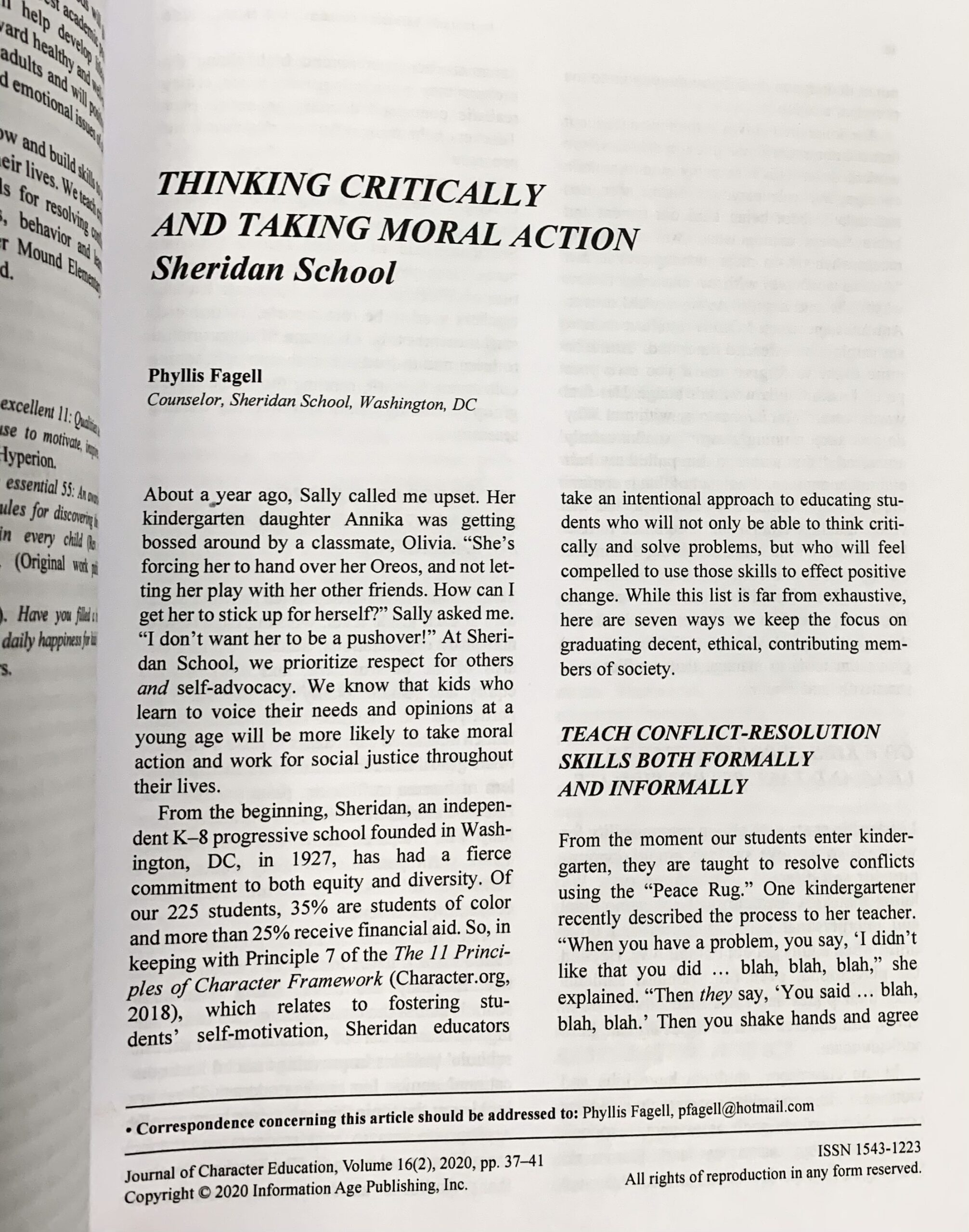
Phyllis contributed an article on ``teaching children to think critically and take moral action`` to the Journal of Character Education (Volume 16, Number 2, 2020).
Click To Read More
As Phyllis wrote in this article for EL Magazine's December 2020 issue, it’s easy to sink into pessimism and focus on what we’ve lost when we're in the middle of a pandemic. But it’s far more productive to alter our mindset & recognize that peaks can’t exist without valleys.

Click To Read More
Phyllis spoke to Timmy Bauer, host of The Literacy Advocate Podcast, about middle schoolers and social-emotional skills. As she told Bauer, ``Kids often can get confused and think that they’re better off trying to impress somebody, when it's so much better to try to connect with them.”
Click To Read More
Phyllis was a guest on The Kojo Nnamdi Show (NPR) to talk about children's needs as we head into the ninth month of the pandemic.
Click To Read More
In December’s episode of PrepTalks, Ned Johnson sat down with Phyllis to talk about how the middle school years offer parents a low-stakes, high-reward opportunity to build confidence, character, and resilience and to teach kids the critical skills they’ll need to thrive in the years to come.

Click To Read More
Let’s “aim for good enough this holiday season,” Phyllis told the author of this Your Teen article about her Facebook Live conversation on the same topic.

Click To Read More
Phyllis is quoted in this MindShift article. She tells author Gail Cornwall: “Every single one of you is going to get rejected at some point, and it’s not because there’s something wrong with you. This is just a time when kids are figuring out how to choose—and be—a good friend.”

Click To Listen
Two civil rights attorneys who focus on special education and kids' rights interviewed Phyllis for this episode of the Inclusive Education Project Podcast. They discussed middle schoolers' unique social and learning challenges.

Click To Read More
While many children are learning from a distance, parents and teachers need strategies to help them maintain their peer relationships. Phyllis spoke with MindShift about how to best support existing friendships and promote new friendships.
Click To Read More
As girls get closer to adolescence, their confidence takes a hit. Boys experience a bit of bumpiness in puberty, but girls drop well below them. Here are 4 things that parents can do to counteract the slide.
Click To Read More
This isn't the year we imagined, but it’s the one we’ve got. We can either fight reality or learn to sit with discomfort & adapt. In her latest @AMLE column, Phyllis shares 3 ways educators can preserve optimism & build a more resilient school community.

Click To Read More
Phyllis wrote this article for the National PTA about how parents can help their child navigate an unusual and uncertain school year.
Click To Read More
In this article about her own teen daughter's mental health struggles, writer Laura Evans spoke to Phyllis about how parents can help young adolescents who are depressed or anxious.
Click To Read More
Phyllis shared five ways adults can reach middle schoolers and impart messages about healthy choices.
Click To Read More
Phyllis was quoted in this Your Teen Magazine article, ``Teach Middle Schoolers How to Hang Out While Social Distancing.``

Click To Read More
The Richmond News in Vancouver chose ``Middle School Matters`` as one of its top back-to-school book picks.

Click To Read More
Phyllis was interviewed in this Chicago Tribune article, ``Stop Bugging Your Kid During E-Learning.``

Click To Read More
Phyllis was quoted in this article in Parents Magazine about preparing kids for the first day of middle school.
Click To Read More
Phyllis was quoted in this Your Teen Magazine article, ``Teach Middle Schoolers How to Hang Out While Social Distancing.``
Click To Read More
Phyllis wrote this blog for Responsibility dot Org and Ask Listen Learn to help parents talk to their children about underage drinking and cannabis use.
Click To Listen
Phyllis was a repeat guest on Your Teen Magazine's podcast, talking about everything tween-related.
Click To Listen
Phyllis was the guest on the podcast, ``We Turned Out Okay,`` talking about a broad range of parenting issues.

Click To Read More
Phyllis was a guest on the Tom Matt Show -- an interview that also was featured on Michigan Talk Network, PBS radio and WKAR'a AM870 and FM 105.7 stations.
Click To Read More
Phyllis was quoted in this New York Times article about how parents can use this time to help their kids take a hard look at their friendships, including friends they may want to leave behind. A Quarantine Benefit: Lowering the Flame on Tween Drama
Click To Read More
Phyllis wrote this Washington Post article about how parents and educators can help children adapt to a new school year that will be full of change and disruption. She includes advice from infectious diseases specialists, psychologists, educators and resiliency experts.
Click To Read More
Phyllis was quoted in this New York Times article by Jenny Anderson about preparing kids to thrive academically when instruction is virtual.
Click To Listen
In a year when ``back to school`` means uncertainty and nothing close to normalcy, many parents and educators are experiencing a great deal of anxiety. In this podcast, Phyllis talks to Your Teen Magazine editor Susan Borison about how adults can unpack their feelings and model calmness for kids.
Click To Listen
Phyllis spoke on the Out of the Trenches podcast, sharing her thoughts on managing conflict at work, taking risks, learning from failure and navigating change.
Click To Read More
``The quarantine is giving kids physical and emotional distance from their friends,`` Phyllis points out in this New York Times article. As she told the reporter, ``It's a unique opportunity to reflect on which of their friendships 'fill' their bucket.”
Click To Listen
Phyllis spoke with news anchor Mike Dubberly on his podcast, ``Mike Behind the Mic,`` about children's differing educational needs.
Click To Watch
The publisher and editors of Your Teen Magazine conducted a live interview with Phyllis about tweens and issues around covid-19, social distancing, school engagement and online use.

Click To Read More
Children are resilient, but they're far less likely to thrive if the adults in their life are too stressed out to function. School and district leaders can help kids by supporting their educators & parents, but many have decision fatigue themselves. In this article Phyllis and Joshua Starr for Education Week, they offer leaders some strategies for sustaining their own stamina so they can take care of everyone else.

Click To Read More
It’s easy to think that tweens don't care about much, but that's far from the truth. In this blog for TRAX--part of the Public Broadcasting System--Phyllis shares how to spot when they're trying to open up, and how to help them decipher the mixed messages coming their way

Click To Read More
In this article for Very Well, Amy Morin asked Phyllis and other therapists about the mental health trends that most concern them and whether they think the pandemic might have a positive impact on the mental health field.
Click To Read More
The editors of Your Teen Magazine conducted a Q & A with Phyllis about issues impacting tweens during covid-19.

Click To Read More
Phyllis's work was highlighted in this Remaking Middle School update. She is part of a broad-based coalition of researchers and practitioners taking a fresh look at how we can structure middle schools to best meet kids' needs.
Click To Read More
Phyllis was one of two authors featured in the Hachette newsletter, which gets distributed to 45,000 readers. The publisher links to a video of her discussing tips for parenting middle schoolers.
Click To Read More
Under the best of circumstances, children need to know that their world is safe and that they're competent and worthy of respect. That need for reassurance is exponentially higher in the midst of a global pandemic. Students can't solve problems, learn, self-regulate, or exhibit empathy or self-compassion if they're marinating in fear. In this article for EL Magazine (ASCD) Phyllis shares seven ways educators can help kids grieve what they've lost, cope with uncertainty, and adjust to distance learning in a new reality. The most impactful gestures are often the simplest
Click To Read More
Chicago Tribune columnist Heidi Stevens did a Q and A with Phyllis. Stevens writes, ``Depending on your school district, your kids have been e-learning for anywhere from a few days to a few weeks. I'm hearing a lot hi of phrases like, “cruel joke,” “constant tears,” “panic attacks” and “how early can I start drinking” from parents. I called school counselor, author and mom of three Phyllis Fagell for some guidance. She says: 'The burden parents put on themselves should not be to homeschool their children while working from home. It should be to navigate a crisis and do what they can to help their children adjust and adapt to unfathomable changes and stress while retaining as much of a sense of safety as possible.'``
Click To Read More
Middle school friendships are complicated. Phyllis shares how parents can help kids thrive socially in this Washington Post article. She writes, ``I had an hour to meet with the students alone so they could unload worries. As we dove into the topic of friendship, I shared statistics that normalized the social churn. “Only 1 percent of seventh-grade friendships are still intact in 12th grade, and more than two-thirds of friendships shift during the first year of middle school,” I told them. “Every single one of you is going to get rejected at some point, and it’s not because there’s something wrong with you. This is just a time when kids are figuring out how to choose — and be — a good friend.”
Click To Read More
In this article for Psychology Today, Phyllis walks parents through social distancing and its effects on tweens' connections, including how it can heighten their sensitivity to perceived slights.

Click To Listen
The COVID-19 crisis has been hard on everyone — but especially middle schoolers. The producers of Care.com's Equal Parts podcast invited Phyllis back to talk about how parents can help their pre-teen children navigate the quarantine.
Click To Read More
Educators need to model risk-taking too. Here are four ways you can overcome fear and act with intentionality, no matter what you hope to accomplish.
Click To Read More
Phyllis was interviewed for this Edutopia article about virtual school counseling in the time of coronavirus.

Click To Listen
Phyllis was a guest on the Tom Matt radio show in Michigan, talking about parenting tweens in both typical times and during a crisis.
Click To Listen
Is it possible to meet the social-emotional needs of students while teaching online? Yes and no. Phyllis and Joe Mazza, a middle school principal, take a candid look at what we can do and what we can’t do to help students through an emotional period.
Click To Listen
Phyllis was a guest on the podcast ``Language During Mealtime,`` talking about middle schoolers and COVID-19.``
Click To Read More
``The more this pandemic turns middle schoolers’ lives inside out--canceling everything from school musicals to sports to birthday parties--the more they'll crave normalcy.`` Phyllis shares ideas to support students in her AMLE column.``

Click To Read More
``A reporter interviewed Phyllis for this Quartz article about how we can help tweens get through the coronavirus crisis.``
Click To Read More
In this AMLE Webinar--Promoting Student Wellness during COVID-19--Phyllis leads a conversation on student wellness and provides tips for helping young adolescents manage stress during the pandemic.

Click To Listen
The middle school years can be challenging for kids (and parents), but they also are some of the most rewarding. On the Equal Parts podcast, Phyllis shares advice on how to love and support middle schoolers through a time of tremendous flux and change.

Click To Read More
Phyllis was quoted in this article on why kids refuse to wear coats when it's cold out. She pointed out that ``preteens—and particularly boys—have a strong desire to be perceived as tough and “not seem like a baby.” And perhaps nothing seems more babyish than being bundled up in soft, fluffy winter gear your mommy picked out for you. In other words, good old-fashioned healthy rebellion and a push toward bodily autonomy could be at the root of coat revolt.``

Click To Read More
Parents need to teach tweens about safe sex before they're sexually active, but tweens are self-conscious and unlikely to initiate the discussion. They're also less likely than older teens to have had either a romantic relationship or sex, and they may have difficulty contextualizing information or seeing its relevancy. In this article Phyllis co-wrote for U.S. News, she shares four ways adults can broach an awkward topic.
Click To Read More
Most tween drama stems from lack of social skills & life experience, not a lack of empathy. The stereotype of the mean middle schooler may be ingrained in the culture, but it's off-base & undermines kids' ability to trust one another. In her Meaningful Middle column for AMLE, Phyllis shares six ways educators can help middle schoolers create a kind, trusting culture.
Click To Read More
Phyllis shared this advice in ``Your Teen Magazine`` to help a mother and daughter settle a debate over getting a dog.

Click To Read More
In this Q and A for the Michigan Association of Secondary School Principals (MASSP), Phyllis answers principals' questions about a range of middle school issues, from communicating effectively with tweens, to managing behavioral challenges, to helping kids navigate tremendous internal and external change, to creating a strong home-school partnership and easing parents' sense of isolation.
Click To Listen
Phyllis was a guest on the Ed's Not Dead podcast, talking about why middle school matters.
Click To Listen
Phyllis was a guest on Will Parker's Principal Matters podcast. They talked about the steps administrators can take to best meet the needs of middle school-aged students.

Click To Read More
By the time students start high school, most should have enough confidence to self-advocate, including talk to teachers on their own. Phyllis contributed to this ``Family Circle`` article about what parents can do to ensure their kids have the skills to manage the transition.

Click To Read More
The Atlantic asked Phyllis to weigh in on why some tweens wear shorts all winter, and how parents should respond when it's freezing out and they insist they're not cold.
Click To Read More
Phyllis interviewed Peggy Orenstein for The Washington Post about her new book, ``Boys & Sex.`` They talked about Peggy's extensive conversations with boys between the ages of 16 and 22 and covered a lot of ground, including what boys want from their fathers. Peggy told Phyllis, ``One of the things the boys said often was that they felt kind of disappointed by their dads. It wasn’t just the guys whose fathers said, “Man up.” It was also, “My dad was a loving, charismatic guy, but he was a ‘sigh and walk away’ guy, and I learned the stunted side of masculinity from him.” Or, “He caught me watching porn, and I wish he’d said that wouldn’t serve me.” One boy said, “I wish my father had talked about some of his regrets in his sexual and romantic life; that might have been really helpful to me.”
Click To Read More
Phyllis's interview with The Atlantic writer Alia Wong about MIDDLE SCHOOL MATTERS and how we can address middle schoolers' distinct needs made this list of the ``most memorable family and education interviews in 2019.``

Click To Read More
Phyllis contributed this article to ASCD's EL Magazine on ``five ways teachers can bring out the best in middle schoolers.``
Click To Read More
Phyllis wrote this Living cover article for The Washington Post on how parents and educators can teach tweens to give generously without sacrificing themselves. If adults don't talk to kids about reciprocity and healthy boundaries, an empathetic child can get vaporized. As Helen Riess notes in the piece, ``Self-neglect is a perilous way to live, because you're of no use to anybody if you've got nothing left to give.``

Click To Read More
Phyllis co-wrote this article about tween depression for U.S. News & World Report. As she notes: ``Tweens often get lumped in with older teens in studies, but they possess distinct characteristics and needs. Researchers reported in the journal Pediatrics, for example, that while 50% of parents were unaware of their 11- to 17-year old's suicidal thoughts, younger adolescents were more likely than older teens to deny their pain.``

Click To Read More
Phyllis wrote this article, 10 Ways We Can Help Tweens Feel Included, for Middleweb. ``In 7th grade, Katie started dressing more androgynously, pairing her jeans with suit vests, ties and the occasional fedora. The comments started coming when she cut her long, blond hair short and dyed her bangs black. ``Are you gay?” one boy asked her.
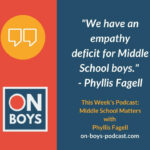
Click To Listen
Phyllis was a great on the ON BOYS podcast. She spoke to Jennifer Fink about what would most surprise people about middle school boys, and how we can best support them
Click To Read More
The National PTA wrote this article about their conversation with Phyllis about what kids need to have a positive middle school experience.
Click To Listen
Our job is not to protect children from disappointments. Our job is to help children recover when they experience them.” Phyllis was a guest on The Parent Shift podcast about how adults can help tweens thrive

Click To Read More
If teachers can equip middle schoolers to take risks when they’re at their most self-conscious and insecure, they’ll turn out individuals who can lean into discomfort for the rest of their lives. Phyllis wrote this article for Edutopia: ``3 Ways To Boost Middle Schoolers' Confidence in Class.``

Click To Watch
Phyllis was a guest on Good Day Alabama, talking about how parents can help their kids cope with bullying

Click To Read More
The Reading Eagle in Philadelphia ran a review of ``Middle School Matters,`` writing, ``If there's a middle schooler in your life, I highly recommend giving it a read...with the help of experts, the middle school years can be so much more than a period to endure.``
Click To Read More
In this column for AMLE, Phyllis shares eight counseling strategies that educators can apply to the school setting to better connect with their students.
Click To Read More
In her first column for Michigan Association for Secondary School Principals (MASSP), Phyllis shares why middle school administrators are uniquely positioned to help students emerge from the phase feeling stronger and wiser for their struggles.

Click To Read More
The New Yorker writer Lizzie Widdicombe shared Phyllis's thoughts on middle school drama and how individuals can tap their core values and exert subtle social pressure to combat bullying. Widdicombe focused on how politicians can apply lessons learned from the middle school front to the presidential election.
Click To Read More
Tweens increasingly are using e-cigarettes. Fortunately, they're still impressionable and care what their parents think. Here are five ways to decrease the likelihood that your tween will decide to vape. Phyllis co-authored this article for U.S. News and World Report with Dr. Susan Newman.

Click To Read More
Philly Tweens published an excerpt of ``Middle School Matters,`` drawn from the chapter on raising sexually healthy middle schoolers.

Click To Listen
Phyllis was a guest on the Positively Dad podcast, talking about everything from the important role fathers play in their tween daughters' lives to parent-tween communication strategies.
Click To Read More
The Atlantic interviewed Phyllis about ``Middle School Matters,`` the developmental factors that make the phase particularly challenging, and the ways in which middle schools could better address the needs of this age group.

Click To Read More
How should parents talk to kids about school safety issues? Tribune Media Services interviewed Phyllis for this article, in which she notes that while parents can rehearse phone numbers with their child and talk about what to do in case of an emergency, they should mostly try to be a non-anxious presence.

Click To Watch the Video
Phyllis did a Facebook Live with Amaze.org, an organization that produces animated videos for tweens about their bodies, sex and relationships. Phyllis answered questions from tweens and parents about middle school, covering topics ranging from shifting friendships and mean behavior to homework and managing stress.
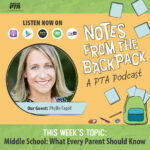
Click To Read More
National PTA invited Phyllis on their new podcast, “Notes from the Backpack.” This episode features her viewpoint on what families can do to prepare themselves, and their child, for the middle school transition. They also talked about a wide range of other middle school issues.

Click To Listen
Phyllis was a guest on the Kathryn Zox show on Voice America, talking about everything middle school-related.

Click To Read the Bookazine article
Phyllis was interviewed for this TIME piece on how to help kids manage stress.
Video coming soon
Phyllis was a guest on Good Day | Fox 5 DC. She shared her thoughts about the controversy over allowing use of cell phones in schools.
Click To Read More
Phyllis wrote this The Washington Post cover story (Local Living) about how parents and educators can leverage tweens’ strengths, address their distinct developmental needs, and help them have a positive middle school experience.
Click To Read More
When Phyllis wrote this article for The Washington Post about helping kids transition to middle school, she spoke to one principal in Missouri who spends the summer visiting every one of her rising 6th graders at their homes. Once her students recover from the shock of seeing their principal at the front door, they start firing off questions that reveal their fears about the shift from elementary to middle school. Here are several ways parents and schools can help ease their concerns.
Click To Listen to Episode
Phyllis was a guest on The Lisa Show. She talked with the hosts about her book, Middle School Matters, among with the factors that can make being — and parenting — a tween so challenging. Here’s a link to the episode.
Click To Read the Article
In this The Chicago Tribune column, Heidi Stevens writes: “Middle school has a lousy reputation (Frenemies! Hormones! Lockers!) but Phyllis Fagell’s new book, “Middle School Matters,” aims to change all that—she points out that kids can emerge stronger & wiser for their struggles.”
Click To Read More
Tweens can bewilder their parents by toggling inconsistently between seeking affection and demanding privacy, soliciting advice and asserting independence. In this Washington Post article, Phyllis shares eight ways parents can disrupt that dynamic and stay connected to their child during a phase that’s defined by contradictions and flux.
Click To Read the Article
Safe spaces where middle schoolers can explore their identity are powerful because they normalize students’ experiences & decrease their sense of isolation. That only happens when kids are setting the agenda & talking to one another, not listening to us. Phyllis offers several strategies for launching affinity groups in this column for The Association for Middle Level Educators (AMLE).
Click To Read More
In this article for the journal “Inspiring Character,” Phyllis outlines several ways we can collect and interpret parenting advice in the era of information overload.

Click To Read More
Phyllis was interviewed for this article in The Atlantic about helping parents, children and educators manage the mounting anxiety surrounding the start of school after several gun massacres. As she tells the writer, Alia Wong, “There’s something wrong when I’m getting an email offering a free course … learning how to pack wounds and apply a tourniquet.”
Click To Read More
In this Q and A blog for Psychology Today, Dr. Maureen Healy asks Phyllis for her thoughts on everything from gender identity to screen time to connecting with tweens.

Click To Listen to the Podcast
Phyllis was a guest on the Mind Matters Podcast, talking about everything from helping kids make a smooth transition to middle school transition to supporting gifted and twice-exceptional students.

Click To Read More
Amy Morin interviewed Phyllis for this Inc. Magazine article about fostering healthy risk-taking in tweens. A sample tip: “Help your child practice taking safe risks one small step at a time. Push too hard and they'll shut down, but don't push hard enough and they won't make progress. Aim for small exposures to help extinguish their anxiety. For instance, it might be excruciatingly hard for a child to invite that girl she admires to her house for a sleepover, but maybe she can start by saying hi in the halls, then try exchanging generic texts, or asking the girl a question about a movie.”
Click To Read More
The writer Deborah Farmer Kris wrote this article about “Middle School Matters” and both the magic and challenge of parenting kids through the phase. She captures the importance of diving in and focusing on raising kids who have good character and a solid sense of their parents’ values.

Click To Read More
Phyllis wrote this article for Working Mother Magazine about how parents can raise bully-resistant daughters who are able to navigate conflict both now—at school—and later, in the workplace. She offers strategies for helping girls take risks, go against the grain, and bounce back from failure.
Click To Read More
Phyllis was a guest on the Dr. Robyn podcast. In the episode, she talks about why middle school is possibly the most critical but also the most neglected developmental stage, and she shares tips for talking to tweens about the topics that really matter.
Click To Read More
Parents often wonder whether they should let their child — or even encourage them — to quit an activity. They might say, “Does it matter if they have a special talent, or if we’ve sunk a ton of time and money into their pursuit?“ Or they might ask, “Why would my kid suddenly want to drop something they used to enjoy?”

Click To Read More
Middle School Matters earned a starred review from Booklist, which calls the book ``a must-read for all parents and educators of kids in this unique and often misunderstood age group.``
Click To Read More
Middle school educator (former principal and long-time teacher) Katey McPherson interviewed Phyllis for her podcast, asking questions about shifting friendships, perfectionism and achievement pressure, and the role of parents during the middle school phase.
Click To Read More
How to help students struggling with the move from elementary to middle school

Click To Read More
Childhood has changed for this generation of middle schoolers. In this article for “Kappan,” Phyllis writes about what it means to be a tween today
Click To Read More
It can be frustrating to parent — or teach — a child or teen with “Eeyore Syndrome.” These are the kids who are relentlessly negative. They’ll say things like, “My teacher thinks I’m stupid,” or “I failed the test,” or “Everyone hates me.” Phyllis spoke to several experts to get these tips on how to turn this around.
Click To Read More
Middle schoolers are unfairly maligned, so Phyllis wrote this article for Ask Listen Learn to bust some myths. For starters, most tweens really dislike drama—especially from their parents. Here’s her take on some of the biggest misconceptions about kids this age—and how parents can make the most of this critical phase.

Click To Read More
Phyllis was a guest on the podcast Thirdspace, which covers issues of diversity, equity and inclusion. In this episode, Phyllis talks to the show’s host, Jen Cort, about identity development, affinity groups and mental health.
Click To Read More
In this Washington Post article, Phyllis shares several ways parents and educators can combine forces to bolster kids’ resilience and build a stronger safety net.
Click To Read More
Phyllis shares her thoughts on negative emotions in school. Is it wise, advisable or effective to hide the negative emotion
Click To Read More
Phyllis talks about how educators can help students repair damaged relationships and make behavioral changes
Click To Read More
Phyllis’s work was featured in this article in The New York Times. “How to Help Tweens and Teens Manage Social Conflict”
Click To Read More
We can’t afford to overlook kids who resort to bullying. Their behavior wreaks havoc with their moral compass, lowers their empathy and hardens them to the consequences of their actions. But the greatest reason aggressors should stop is the damage they’re doing to others. In this article for “Your Teen” magazine, Phyllis outlines several ways parents can intervene when their kid is the one doing the bullying.

Click To Read More
Phyllis was quoted in this article about how to recognize, prevent, and respond to cyberbullying. As she told the writer, “If the cyberbullying involved a humiliating rumor, help the targeted child come up with a dry, boring story they can repeat to the first 15 people who ask what happened.”
Click To Read More
Phyllis shares her thoughts on teens and ridesharing safety in this Your Teen article by Cathie Ericson.
Click To Watch
Phyllis talks about teen jealousy, FOMO, and teaching girls to support one another in this Facetime Live with Roy Petitfils, the host of Today's Teenager podcast.
Click To Read More
Phyllis’s work was featured in this article in The New York Times. “Breaking Masculine Stereotypes: Some pioneering programs are teaching boys to question gender roles, both for their own well-being and as a way to prevent sexual violence.”
Click To Read More
Girls who perceive that it’s a zero-sum game are less likely to support one another and more likely to view each other as threats, but this is short-sighted. When girls band together, they expand their options. Here are seven ways parents can raise empowered girls who celebrate and encourage each other throughout their lives.

Click To Read More
In this article for The Boston Globe Magazine, Jessica Lahey interviewed Phyllis about the importance of accepting our children for who they really are. Lahey writes about how the combined pressures of grades, sports, and college admissions can make it really hard to be patient with our kids, and she urges us to give our adolescents a little time and space to do the best they can—and to let that be enough.

Click To Listen
Phyllis was a guest on Breaking the Boy Code Podcast. In this episode, the host talks with her about her experiences working with boys in a K-8 school, and also interviews a 14-year-old boy who is struggling with stress and body image issues.

Click To Watch
I had fun doing a Facebook Live episode with the hilarious Deva Dalporto of My Life Suckers. We talked about how parents can teach kids to make good, safe and smart choices—whether it involves drinking or choosing friends.
Click To Read More
Redefining the End Goal - Seven ways educators can help students look beyond grades

Click To Read More
Exceptional Two Ways - Gifted Students with Disabilities Often Miss Out On Support

Click To Read More
Follow These Steps to Ease Student Anxiety in Your Classroom

Click To Watch
Phyllis was the guest on BBC World News (Beyond 100 Days), talking to reporters Katty Kay and Christian Fraser about the dramatic rise in self-harming behavior among children.
Click To Read More
Jealousy is a tough emotion that can’t be vanquished. As kids get bombarded daily with messages that they’re not enough, we need to connect them with their strengths & help them appreciate that no one’s life is perfect. Everyone has insecurities and vulnerabilities. Here are some ways to help kids react constructively, in my latest article for On Parenting (The Washington Post).
Click To Read More
We worry about students who don't pull their weight, but kids who dominate lose out, too. They don't develop intellectual humility, and the loudest voice in the room can impede innovation. If we want to teach kids how to value diversity of thought—a skill that leading companies look for in job applicants—then we need to approach group projects differently. I’ve shared four ideas in my “The Meaningful Middle” column for AMLE Magazine.
Click To Watch
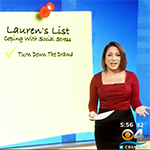
MIAMI (CBSMiami) – The start of another school year is just days away, and while students are stressing over schedules and supplies, parents have their own concerns. My son is still really young, but I remember middle and high school. There’s plenty of drama to go around. So one mom, Phyllis Fagell, who also happens to be a school counselor, has some advice, and we’re breaking it down in today’s “Lauren’s List.”
Click To Listen
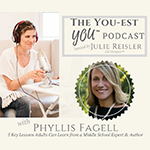
Five key lessons adults can learn from a middle school expert and author.

Click To Read More
I spoke to Phyllis Fagell about the four biggest misconceptions about school counselors.

Click To Read More
Spending as much time as we do together, our classes can bond like families, and students can start to feel like our own kids. But when it comes time for them to move on to the next grade, the next school, or the next step in their lives, it can be hard to know the best way to stay in touch with students.
Phyllis Fagell, school counselor at the Sheridan School in Washington, D.C., and therapist with the Chrysalis Group in Bethesda, Maryland, offers tips to help educators cope with the sense of loss when students move on to their next chapter.
Click To Read More
7 strategies to help prepare your child for the rapidly changing work world

Click To Read More
On The Hill: How parents can talk to their kids about school shootings
Click To Read More
Seven steps parents can take to ensure kids work for the right kind of popularity
Click To Read More
9 ways to help boys form the close friendships they crave
Click To Read More
Parent/Teen Purple Hibiscus Review
Click To Read More
News Interview: How To Connect With Teenage Boys
Character.org

Click To Read More
Reinforcing Values In Children
Click To Read More
9 ways parents can empower a child who has learning issues
Click To Read More
10 ways schools can improve workplace satisfaction

Click To Watch
Video: How To Talk To Kids About Sex

Click To Read More
Want to Raise Empowered Women? Start in Middle School!
Click To Read More
How To Talk To Kids About Sex
Click To Read More
3 Things School Counselors Want you to Know About Their Jobs
Click To Read More
10 Ways 'Design Thinking' Can Help You Raise Resourceful Kids
Click To Read More
When Every Educator in a Middle School Shadows a Student for a Day
Click To Read More
The Myth of the Straight A Student and 6 Ways to Debunk It
U.S Department Of Education

Click To Read More
Developing Strong and Confident Women
Click To Read More
7 Ways to Foster Kids’ Confidence and Creativity with Maker Learning

Click To Read More
Beyond Sex Ed: How to Talk to Teens about Love
Click To Read More
Want to Raise Empowered Women? Start in Middle School
Click To Read More
5 Ways to Help Your Child Survive the Social Turmoil of Middle School
Character.org
Click To Read More
What's Happening in Character Education?
Click To Read More
Six Ways Parents and Schools Can Teach Teens about Love

Click To Read More
How to Encourage Job Skills for Kids
Click To Read More
Middle Schoolers Dealing with the Scary Things
Podcast: With Annie Fox

Click To Listen
Interview with Annie Fox of Family Confidential - Myth of the Straight A
Click To Read More
Tips to Help Kids Stay Engaged in Learning Even When the Going Gets Rough
Psychreg

Click To Read More
How Twitter Can Help Therapists Avoid the Danger of a Single Story
stopmedicineabuse.org

Click To Read More
Four ways parents can help perfectionist teens get out of their own way
Click To Read More
6 Ways Parents Can Help Kids Survive Gossip
Click To Read More
Beyond Power Tools: How Maker Learning Can Improve Social Dynamics

Click To Read More
Why Midlife Might Be the Perfect Time to Meld Skills and Test-drive New Passions
Click To Read More
When Two Seventh Graders Lead A Staff Meeting About Social Drama
Click To Read More
10 Ways to Foster Kindness and Empathy in Kids

Click To Read More
Career Confidential Column: When School Is Your Workplace
Click To Read More
Not Just High Schoolers Anymore, My Middle School Students are Feeling the Pressure to Succeed
Click To Read More
10 Ways to Help Kids Take Risks in a World of Nos and Don’ts
Click To Read More
10 Ways Design Thinking Can Help You Raise Resourceful Kids
Click To Read More
Eight Ways Parents Can Teach Teens To Be Honest
Click To Read More
10 Skills Middle School Students Need to Thrive and How Parents Can Help
Click To Read More
What Children Can Teach Us About Change, Growing Up
Click To Read More
Six Ways Parents Can Stay Connected With Their Teen Sons
Click To Read More
9 Ways Parents can Help Bullied Kids Learn Resilience

Click To Read More
The StudyPro: Facebook Featured Post @thestudypromclean
Click To Read More
10 Ways To Take The Struggle Out Of Homework
Click To Read More
After yet another school shooting, educators have more questions than answers
Click To Read More
Ten Mindfulness Strategies for Educators
Podcast: Parenting Bytes
Click To Listen